


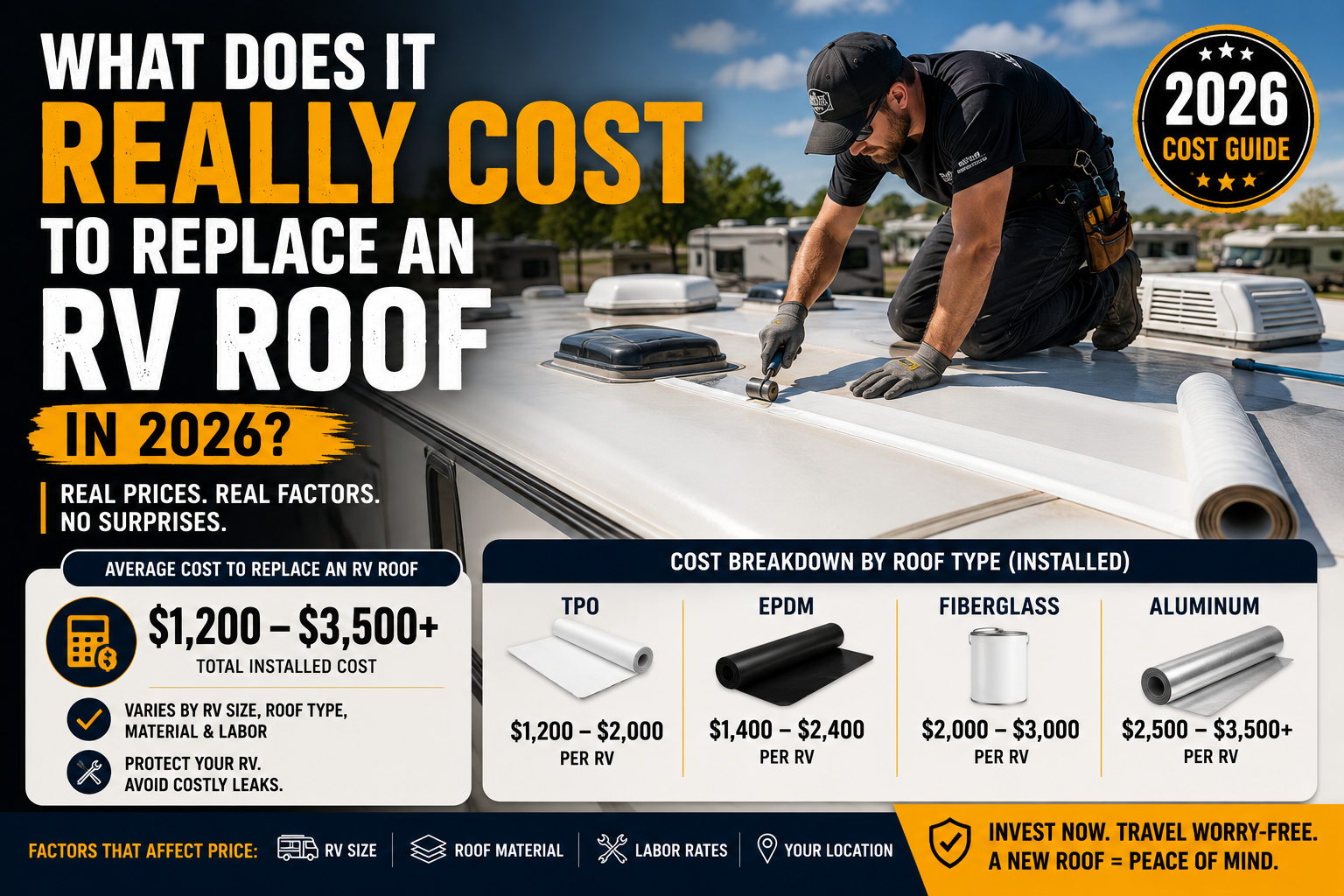
A research-based breakdown for Florida RV owners: materials, labor, local climate factors, and how to save money.
If you own an RV in St. Augustine, Florida, your roof works harder than almost anywhere else in the country. Between relentless UV rays, high coastal humidity, salt air, and hurricane-season storms, an RV roof here takes a serious beating. When the time comes to replace it, knowing what to expect and what makes Florida different can save you thousands of dollars and weeks of stress.
Typical Range
$3K–$10K
Full replacement
National Average
$4K–$8K
Professional install
Minor Repairs
$200–$800
Seals, cracks, seams
DIY Option
$1K–$4K
Materials only
Average RV Roof Replacement Cost: The National Baseline
On a national level, most RV owners can expect to pay between $3,000 and $10,000 for a complete professional roof replacement. The sweet spot for most mid-size rigs lands between $4,000 and $8,000, depending on material choice, roof size, and how much underlying damage exists.
For perspective, minor patching or resealing work typically runs just $200 to $800. If water has soaked into the sub-roof or caused partial rot, partial membrane replacement can push costs to $1,500–$4,000 before you even approach a full tear-off and replacement.
RV Roof Materials & What Each Costs
How St. Augustine’s Climate Affects Your RV Roof and Your Costs
Here’s what many generic RV guides miss: Florida is not a typical environment. St. Augustine’s coastal conditions are genuinely punishing on RV roofing materials, and that affects both how fast your roof degrades and how much replacement will cost you locally.
Florida RV owners take note: In a humid coastal climate like St. Augustine, UV exposure, heavy rains, and salt air accelerate wear on RV roofing materials significantly more than in inland states. Cracked seams and dried sealant that might last 10+ years in Arizona can fail in 3–5 years here.
What are the key local factors that affect RV roofs?
Intense UV Radiation: Florida’s sun is relentless year-round. EPDM rubber, while affordable, is particularly vulnerable; it chalks, dries, and cracks under prolonged UV exposure. St. Augustine RV owners who park outdoors year-round (which most do) should seriously consider UV-resistant TPO or a reflective coating system to extend roof life.
High Humidity & Heavy Rainfall: St. Augustine averages over 50 inches of rain annually. Water finds every tiny gap around vents, AC units, antennas, and seams. Once moisture gets beneath the membrane, wood rot follows quickly in Florida’s heat, and that dramatically increases your replacement cost. What starts as a $500 resealing job can become a $7,000 full replacement if left unchecked.
Salt Air Corrosion: Proximity to the Atlantic means salt air is a constant. Metal fixtures, fasteners, and aluminum roof components corrode faster here than in inland locations. Budget for upgraded corrosion-resistant hardware when replacing your roof.
Hurricane Season: From June through November, St. Augustine faces tropical storm and hurricane threats. Debris impact, wind uplift, and storm surge water intrusion are all real risks. A fresh roof with proper sealing is your first line of defense.
Cost Breakdown by RV Size
| RV Type | Approx. Roof Size | Estimated Cost (Professional) |
| Small Travel Trailer | 100–150 sq. ft. | $1,500 – $4,000 |
| Mid-Size 5th Wheel / Class C | 200–300 sq. ft. | $4,000 – $8,000 |
| Large Class A Motorhome | 350–500 sq. ft. | $7,000 – $15,000+ |
Water damage to underlying wood or insulation can add $3,000 to $10,000 on top of these estimates another reason early detection matters so much in Florida’s climate.
DIY vs. Professional Replacement in St. Augustine
Doing it yourself is technically possible and can cut your total cost to $1,000–$4,000 in materials. However, for St. Augustine RV owners, there are a few extra reasons to lean toward professional installation:
First, Florida’s humidity makes proper adhesion and sealing more challenging; surfaces need to be completely dry, which can be difficult in a coastal environment. Second, a professional installer will catch hidden water damage or rot that’s nearly impossible to spot without removing the old membrane. Third, improper installation can void your RV insurance coverage for future roof-related claims.
If you do go DIY, liquid rubber or spray-on roof systems (applied around $130–$175 per linear foot by certified mobile techs) are a popular middle-ground option in Florida; they come to your driveway or campsite, which eliminates towing costs entirely.
5 Money-Saving Tips for St. Augustine RV Owners
01: Inspect twice a year. Catching a cracked seam early costs $200–$500. Catching it after water damage? Potentially $8,000+.
02: Schedule in the dry season. October through April is ideal; less humidity means better adhesion and faster curing times.
03: Check your RV insurance. Storm or hurricane damage is often covered; wear and tear typically is not. Get clarity before filing a claim.
04: Use UV-resistant coating. Applying a UV-reflective top coat annually extends membrane life significantly in Florida’s sun and costs under $200 DIY.
05: Get 3 local quotes. Labor rates vary among St. Augustine-area RV shops. Mobile techs often cost less than dealer service centers.
Warning Signs Your RV Roof Needs Replacement
Don’t wait for a rainstorm to discover a failing roof. Watch for these signs, especially after Florida’s hurricane season:
- Water stains on interior ceilings : the most obvious warning flag
- Soft spots when walking on the roof : indicates wet or rotted sub-decking
- Visible cracking, bubbling, or chalking : common in aging EPDM roofs under Florida UV
- Dried or cracked sealant around vents, AC units, or antennas
- Delamination of sidewalls: often caused by roof leaks running behind walls
FAQS
How long does an RV roof last in Florida?
EPDM roofs last about 10–15 years, while TPO and fiberglass can last 15–25 years with proper maintenance.
Is RV roof replacement covered by insurance in St. Augustine?
Storm or debris damage is usually covered. Wear and tear or neglect is not check your policy.
Can I replace an RV roof at my campsite or driveway?
Yes, mobile services can replace roofs on-site, saving you towing costs.
What’s the best RV roofing material for the Florida coast?
TPO is best for UV resistance, fiberglass offers top durability, and EPDM is a budget option.
Ready to Protect Your Investment?
Don’t wait for leaks; schedule a local St. Augustine RV roof inspection today.